


Polycarbonate Greenhouses
Explore GT Greenhouse’s diffuse-light polycarbonate greenhouse systems—crafted to prevent foliage scorching and equalize interior solar canopy radiation. The internal cellular structure of our twin-wall panels converts harsh, direct sunlight into a soft, diffused glow that penetrates deep into the lower leaf layers without hotspots. Perfect for high-density nursery propagation, leafy greens, and delicate floriculture, GT Greenhouse ensures continuous, stress-free photosynthesis day in and day out.
Ready to eliminate crop hot spots and maximize canopy light penetration? Consult a GT Greenhouse Optical Lighting Specialist Today →
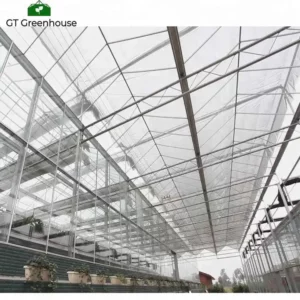
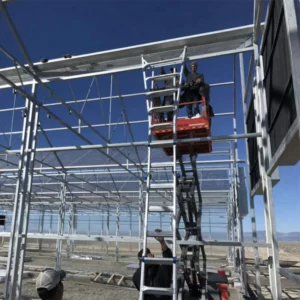

High-Thermal Resistance Structural Solutions by GT Greenhouse: Engineered for Energy Savings & Impact Protection
In regions subject to severe winter cold, extreme temperature fluctuations, or seasonal hailstorms, traditional glass or thin film structures often suffer from excessive heat loss or physical damage. Investing in a heavy-duty Twin-wall polycarbonate greenhouse delivers superior thermal performance ((U-factor as low as 2.3–3.0 W/m²K)) while providing virtually unbreakable cladding. At GT Greenhouse, we engineer precision aluminum-channel locking systems that accommodate thermal expansion, prevent internal panel fogging, and safeguard crops against physical impact.
Technical Specifications & Panel Architecture Comparison
To assist commercial growers and agricultural developers in choosing the optimal sheet configuration, GT Greenhouse provides customizable panel options tailored to regional thermal insulation requirements and light scattering needs.
| Performance Metric / Spec | 8mm–10mm Twin-Wall PC Configuration | 16mm Multi-Wall / Honeycomb PC System |
| Core Structural Category | PC sheet greenhouse | Ultra-Thermal Cold-Climate Complex |
| Thermal Insulation (U-Value) | Approx. 2.9–3.2 W/m²K (Saves 30% heating energy) | As low as 2.0–2.3 W/m²K (Saves 50%+ heating energy) |
| Light Transmittance | 78%–82% Diffuse PAR Light | 65%–72% Multi-layer Scattered PAR Light |
| Impact & Hail Resistance | 200x stronger than glass (Resists 25mm hail at terminal speed) | Virtually shatterproof under extreme ice impact |
| Light Distribution Pattern | High light diffusion (Eliminates focal hot spots) | Maximum light scattering for dense lower foliage |
| UV Resistance Warranty | 10-Year warranty against yellowing & loss of transmittance | 10-Year co-extruded UV layer protection |
Why GT Greenhouse Is the Preferred Manufacturer for PC Sheet Systems
1. Advanced Thermal Barrier & Diffuse Light Transmission
Every Polycarbonate board greenhouse manufactured by GT Greenhouse features co-extruded anti-UV barrier technology on the outer surface and an anti-drip condensation coating on the interior side. The hollow cellular structure creates a natural air-insulation blanket that retains daytime solar heat well into freezing nights, drastically cutting furnace or heat-pump energy costs while preventing leaf scorch through soft diffuse lighting.
2. Extreme Weather Durability & Structural Integrity
Structural reliability in harsh environments is core to our engineering philosophy:
-
Hail and Impact Shatterproofing: Hollow polycarbonate sheets withstand heavy impacts that would instantly shatter traditional float or annealed glass, making them the safest choice for high-hail geographic zones.
-
Corrosion-Resistant Structural Framework: Steel columns, trusses, and purlins feature heavy hot-dip galvanization (Z275–Z450 g/m²), granting a structural service lifespan of 20–30+ years even under high internal relative humidity.
-
Thermal Expansion Engineering: Specialized aluminum profile joints with EPDM gaskets permit the panels to expand and contract smoothly across extreme ambient temperature shifts without buckling or leaking air.
3. Seamless Commercial System Integration
GT Greenhouse hollow-sheet structures easily integrate with automated climate equipment, including motorized shade curtains, evaporative cooling pads, continuous butterfly roof vents, and overhead hydroponic gutter assemblies.
Explore Our Complete Greenhouse Ecosystem
GT Greenhouse provides a full range of growing structures, sub-categories, and environmental control systems:
-
Film & Field Sub-Categories:
-
For economical flexible film solutions, explore our Multi Span Plastic Film Greenhouses.
-
For field crop protection, browse our standalone Tunnel Greenhouses.
-
-
Specialized & Glass Cladding Categories:
-
For decades of optical clarity, examine our flagship Commercial Glass Greenhouses.
-
For 100% complete photoperiod control, discover our automated Blackout Greenhouses.
-
-
Climate Control & Equipment Sub-Categories:
-
Automate side vents, shade motors, and heating loops via our Greenhouse Climate Control Systems.
-
Integrate high-yield growing systems with our automated Hydroponic & Fertigation Systems.
-
-
Corporate Navigation:
-
Learn more about GT Greenhouse manufacturing credentials on commercial greenhouse manufacturer.
-
Polycarbonate Greenhouses FAQ
Q1: How much heating energy can a twin-wall hollow panel greenhouse save compared to film or glass?
Due to the dead-air gap inside the multi-wall cellular channels, thermal conductivity is significantly lower. Twin-wall panels reduce winter heating energy bills by 30% to 50% compared to single-layer glass or standard polyethylene film.
Q2: Will hollow sheets turn yellow or lose light transmission over time?
GT Greenhouse uses premium-grade resin sheets treated with a co-extruded UV-blocking barrier on the exterior face. This prevents polymer degradation, yellowing, and brittleness, backed by a 10-year factory performance warranty.
Q3: How does light diffusion in cellular sheets benefit plant growth?
Unlike direct clear glass beams that can scorch top leaves and leave bottom foliage in shadow, cellular sheets scatter incoming sunlight evenly. Light penetrates deeper into dense crop canopies, boosting overall lower-leaf photosynthesis.
Q4: How is condensation inside the sheet flutes/channels prevented?
We apply an anti-fog/anti-drip coating on the interior surface and seal panel ends with specialized breathable anti-dust tape and aluminum drainage channels, allowing internal moisture vapor to drain out without letting dust or insects inside.
Q5: Can these structures withstand high wind and heavy snow loads?
Yes. Our structural engineers design post spacings, truss bracing, and sheet thicknesses to match your exact climate data, certified to withstand wind gusts over 130 km/h and heavy snow accumulation.